Merhaba and Beyond: Why Learning a Little Turkish Goes a Long Way in Hatay

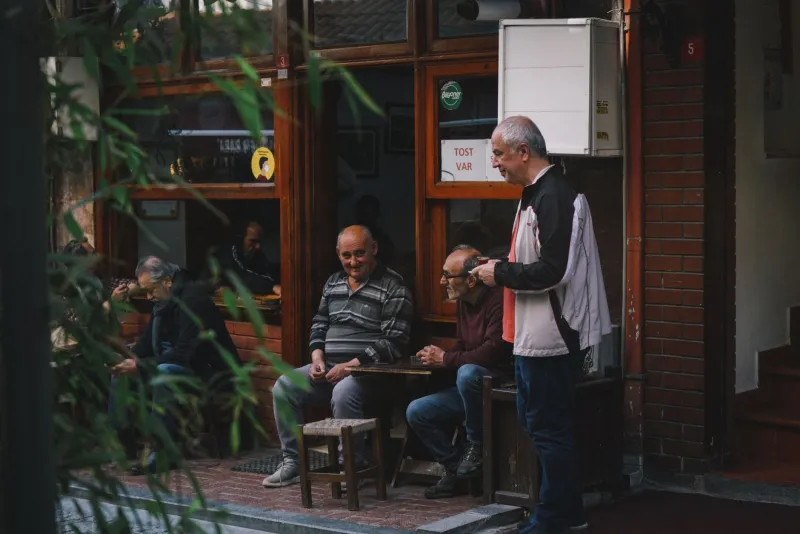
Photo by Photo by liu yi on Unsplash on Unsplash
Most Americans traveling abroad take one of two approaches to language: they either assume everyone speaks English, or they apologize profusely and point at things. Both approaches get the job done — barely — but neither one earns you any real warmth from the locals.
In Hatay, a city with deep cultural roots and a population that takes genuine pride in its heritage, the effort to communicate in even basic Turkish is noticed. And when it comes to companion interactions specifically, that effort can be the difference between a transaction and an actual connection.
You don't need to take a class. You don't need to be fluent. You just need a handful of the right words, an understanding of how Turkish social dynamics work, and the humility to try. Here's where to start.
Why Language Effort Signals Respect
Turkey has a strong culture of hospitality — misafirperverlik — that runs deep. When a foreigner makes the effort to greet someone in Turkish, ask how they're doing, or say thank you in the local language, it registers as genuine respect rather than just tourist politeness.
For companions in Hatay, who interact with a mix of local and international clients, meeting someone who's made even a small effort to bridge the cultural gap stands out. It signals that you see them as a person operating in their own cultural context — not just a service you're accessing from a distance.
This isn't about being performative. It's about showing up with a little more intention than the average visitor.
The Phrases That Actually Matter
Forget the language textbook basics. Here are the phrases with real practical value in the context of meeting and spending time with a companion in Hatay:
Greetings and Courtesy
- Merhaba — Hello (versatile, always appropriate)
- Nasılsınız? — How are you? (formal) / Nasılsın? — How are you? (informal, use once rapport is established)
- İyiyim, teşekkür ederim — I'm fine, thank you
- Lütfen — Please
- Teşekkür ederim — Thank you (the full version, more genuine than the shorthand)
- Rica ederim — You're welcome
Practical Conversation
- Anlamıyorum — I don't understand
- Daha yavaş konuşur musunuz? — Can you speak more slowly?
- Tekrar eder misiniz? — Can you repeat that?
- Biraz Türkçe biliyorum — I know a little Turkish (say this early — it sets honest expectations and gets a smile almost every time)
Compliments and Warmth
- Çok güzelsiniz — You're very beautiful (formal)
- Harika — Wonderful / Amazing
- Çok eğlendim — I had a great time
Pronunciation tip for Americans: Turkish is largely phonetic, which actually makes it easier than French or Mandarin. The letter ş sounds like "sh," ç sounds like "ch," and ğ is essentially silent, slightly lengthening the preceding vowel. Practice a few phrases on YouTube before your trip — there are excellent short videos specifically for Turkish pronunciation basics.
Translation Apps: What Works and What Doesn't
Google Translate has gotten genuinely impressive for Turkish. The camera mode — where you point your phone at text and it translates in real time — is particularly useful for reading menus, signs, and even printed listings. The conversation mode, where both parties speak into the phone and it translates back and forth, works reasonably well for simple exchanges but tends to struggle with nuance.
A better option for deeper conversation is DeepL, which handles Turkish with more natural phrasing than Google Translate in many cases. Download both apps and use them offline — mobile data in Turkey is reliable in urban areas, but having offline language packs downloaded is smart travel practice regardless.
One caution: don't rely on real-time translation during emotionally or socially sensitive conversations. The lag and occasional mistranslation can create awkward misunderstandings at exactly the wrong moment. Use apps for logistics — directions, confirming details, reading menus — and rely on your own basic phrases for the human moments.
Communication Styles: What Americans Often Miss
Turkish communication culture tends to be warmer and more indirect than American directness. Jumping straight to business without any social preamble can come across as cold or even rude. A few minutes of small talk — asking how someone's day is going, commenting on the weather, expressing genuine curiosity about the city — goes a long way before getting into logistics.
Eye contact is important in Turkish culture and signals engagement and sincerity. Avoiding it can read as disinterest or disrespect. Smile genuinely — not the performative American customer-service smile, but actual warmth.
Also worth knowing: Turks often use the phrase inşallah (God willing) in a way that doesn't always mean literal religious conviction. It can be used to express hope, uncertainty, or polite non-commitment. If a companion says inşallah in response to a scheduling question, it may mean "hopefully" rather than a firm yes.
The Bigger Picture: Language as Respect
Hatay sits at a fascinating cultural crossroads — its history includes Arab, Ottoman, and Mediterranean influences that make it genuinely distinct from other Turkish cities. Companions here are part of that community. They live in it, grew up in it, and take pride in it.
When you approach an interaction with curiosity about their world — including their language — you're doing something most visitors never bother with. You're treating a local person as someone worth understanding, not just someone to book time with.
That shift in approach changes the entire texture of an interaction. And honestly, it makes for better travel stories, too.
Bring a few phrases. Download an app. Read a little about Hatay's history before you land. The effort is small. The return is real.